
 US SHOP
 GLOBAL SHOP


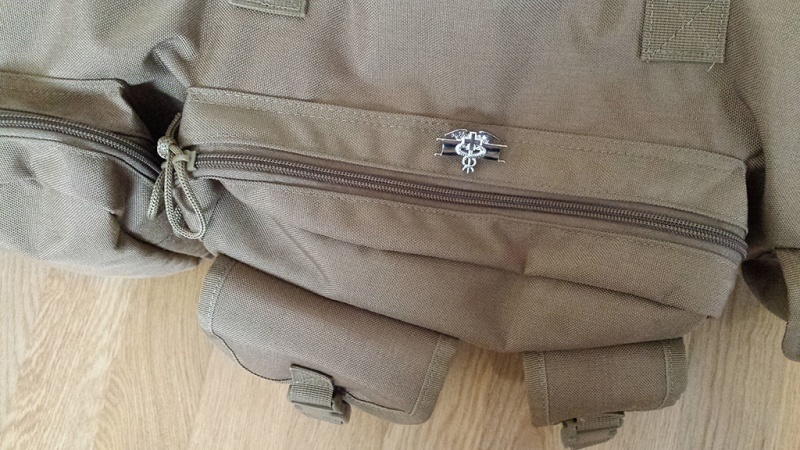
Special Force guy from Slovenian - finished Expert Field Medical Course. We are proud on you!

Friday, September 12, 2014
http://www.stripes.com/news/recipients-of-expert-field-medical-badge-beat-the-averages-1.302182
GRAFENWÖHR, Germany — Medical personnel from across U.S. Army Europe and from the militaries of allied countries left here Tuesday as the newest recipients of the Expert Field Medical Badge.
Of the 281 candidates who arrived here more than two weeks ago, only 137 successfully completed the rigorous and exacting evaluation process that grants them authorization to wear one of the U.S. Army’s highest badges for technical expertise.
That 49 percent success rate is unprecedented, said Capt. Matthew de la Guardia, a spokesman for the evaluation team from the 212th Combat Support Hospital.
“Normally, the EFMB has a pass rate of around 18 percent,” he said. “We usually lose 50 percent on the first day alone.”
During the weeklong testing phase, candidates are thoroughly examined on their medical knowledge. Evaluators look at their performance on everything from impromptu battlefield surgery to stripping weapons; they grade every aspect with either a “go” or a “no go.”
Small mistakes — such as an improperly tied knot or a strap brushing the ground — can result in a “no go” in a section. Three mistakes in any one results in a failure and an empty-handed trip home.
“It’s considered a mark of excellence, and I think every medical soldier strives for it,” said Sgt. Maj. Lee Ridling, a test board member for the EFMB. “It’s not easily achievable.”
This year, USAREUR focused more on the training weeks leading up to the testing days. One returning candidate from the 173rd Airborne Brigade attributed the unusually high pass rate to this emphasis.
“Last year, it was very quick. This year, we had an extra week of train-up, which I was not expecting,” said Cpl. Hayden Miller. “We got to run through the lane and actually do the lane once before we tested. So we had another week to study all that. I think there is going to be a huge success rate this year because of that.”
Miller was among the 137 candidates who were handed their awards by USARUR’s commander, Lt. Gen. Donald Campbell, during a Tuesday morning ceremony. Among them were an airman, a Navy corpsman and 12 international students — five from the United Kingdom, two each from Romania and Slovenia, and one each from Germany and Italy.
Even though the EFMB is an American award, allied troops who pass the evaluation process can also wear the badge.
Romanian Lt. Col. Daniel Ioan said he and Cpl. Gaibar Cristian were the first soldiers from his country to receive the EFMB. He said the differences in how his military and the U.S. military operate created an extra barrier to success.
“It was very hard, but I finished alive,” he said.

Back to list
